When should you start preparing your skin for your wedding?
There is a lot of noise around bridal facials. Packages, timelines, and promises of glowing skin in the weeks before the wedding. I understand why it appeals. When you have a date in the diary, it is natural to want something that feels quick.
But skin does not work like that.
It responds to consistency, timing, and proper management over months.
I work with brides the same way I work with every client. I look at what is actually happening in your skin and guide you from there.
Most brides are not dealing with problem skin. It is more subtle than that. Skin that feels unsettled, a little reactive, not quite how they want it to look in photographs. More pressure, more events, less sleep. It all shows.
Trying to correct that close to the wedding rarely delivers the results people hope for. At best, it is short-lived. At worst, it unsettles the skin at exactly the wrong time.
Good bridal skin is not about doing more. It is about doing what is appropriate, at the right time.
Sometimes that means strengthening the skin first. Sometimes it means improving hydration or overall skin quality. Sometimes it means doing less.
This is where experience matters. Knowing when to step in, when to hold back, and how your skin is likely to respond in the lead-up to the day.
If you want your skin to look its best, the most valuable thing you can give yourself is time.
Ideally, I begin working with brides three to six months before the wedding. That allows us to make changes in a way that feels controlled and considered.
If you have less time, we can still work together. The focus shifts towards settling and supporting the skin, rather than trying to change too much too quickly.
In the final weeks, restraint is key. No new treatments, nothing aggressive, nothing that introduces unnecessary risk. The work has already been done.
On the day, you are not aiming for perfect skin. You are aiming for your skin to look like itself, only clearer and more refined. Skin that holds makeup well, photographs cleanly, and feels comfortable.
I do not separate brides into a different category. Every client begins with a consultation, and from there, I recommend what your skin actually needs.
If you are getting married, start earlier than you think.
More on how I work with brides → Bridal Skin
Or, if you are ready: Book your consultation →
You do not need a facelift. You need a Skin Journey
Skin is not a surface. It is a reflection of what is happening internally, in the gut, in the immune system, in the body's inflammatory responses.
A facial can improve what I see. It cannot address what is driving it.
There is a ceiling to what topical treatment can do on its own.
I have been practising for over 30 years, and one of the clearest patterns I see is this: clients who support their skin from within respond differently in the treatment room. Their skin recovers more readily, holds results for longer, and tends to behave more consistently between appointments. That is not a coincidence.
Skin is not a surface. It is a reflection of what is happening internally, in the gut, in the immune system, in the body's inflammatory responses. A facial can improve what I see. It cannot address what is driving it.
This is why supplements are not an optional addition to a Skin Journey. They are part of the programme.
When I design a Skin Journey for a client, I am thinking about every layer of what influences their skin — not just what I do in the treatment room, but what happens in the weeks between appointments. The home care and supplementation I prescribe are as considered as the treatments themselves. They extend the work. Without them, the programme is incomplete.
The reason I work exclusively with Forlle'd is that their approach reflects this thinking. The formulations are clinically grounded, the active concentrations are meaningful, and the philosophy — that skin responds to sustained, intelligent support rather than quick intervention — aligns precisely with how I practise. I would not recommend anything to a client that I did not believe in clinically, and I do not.
If you are curious about what a structured, inside-out approach to your skin could look like, the right place to begin is a consultation. That is where we assess what your skin genuinely needs — and build a plan around it.
The first signs of skin ageing, and how to respond
Why I use radio frequency within a Skin Journey, and how I choose between three different technologies
If you have come across the term mesotherapy and are not quite sure what it means, you are not alone. Many of my clients ask the same question.
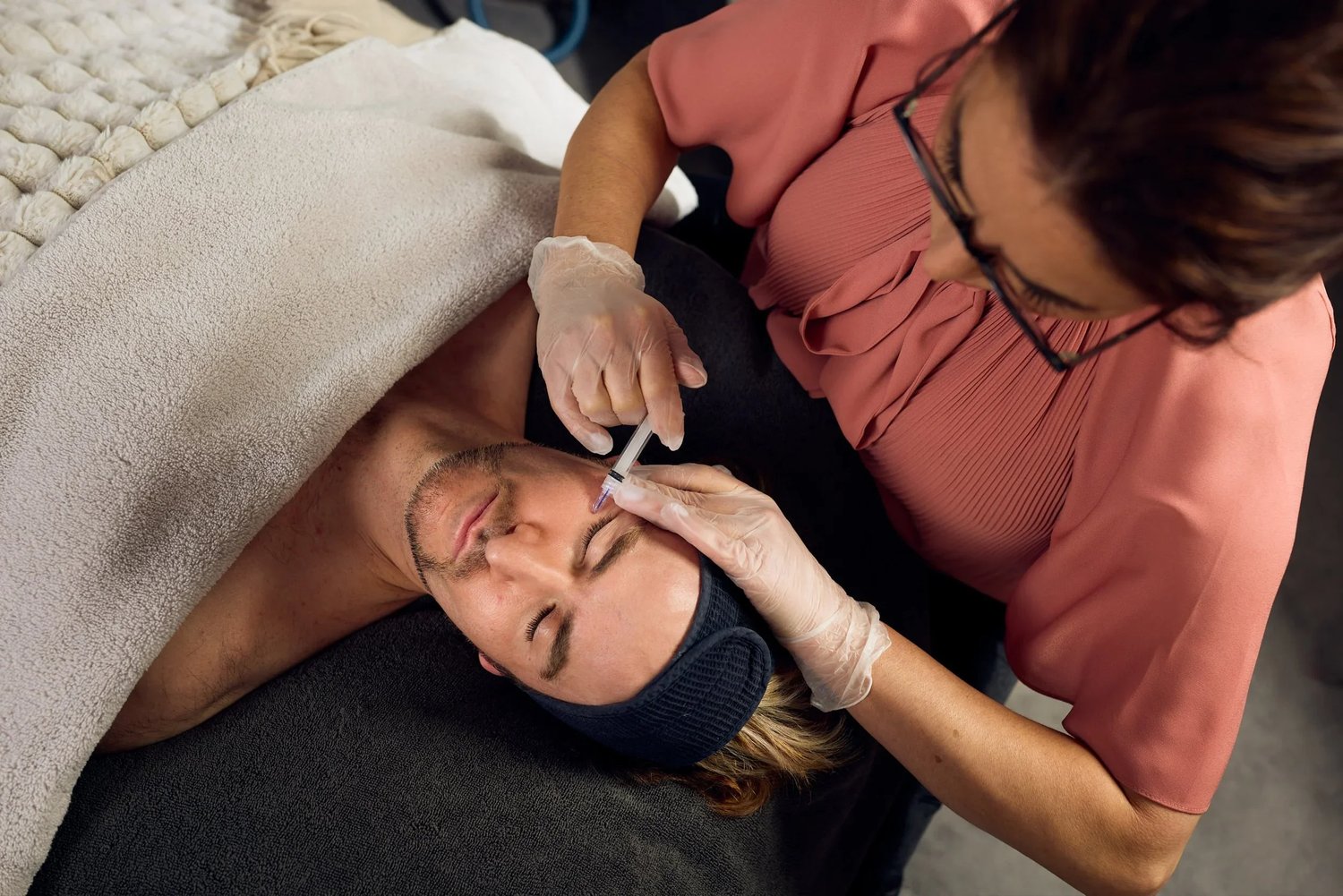
Mesotherapy is a non-invasive treatment that delivers active ingredients into the deeper layers of the skin, either via micro-injections or no-needle technology. Unlike most topical products, which remain on the surface, these ingredients are absorbed precisely where they are needed.
Depending on your skin, this might mean soothing inflammation, strengthening barrier function, improving hydration, or supporting collagen production. The approach is tailored – built around what your skin actually requires, not a standard protocol.
Not all mesotherapy is the same
What you introduce into the skin matters enormously.
When I carry out mesotherapy, I do so with deliberate care. I do not follow trends or choose ingredients based on what is currently popular. I use formulations that are clinically studied, well-constructed, and purposeful.
Your skin deserves more than guesswork.
Thirty years of practice means being selective
With over 30 years of hands-on experience in skin health, I have witnessed countless ingredients make headlines, only to disappear quietly when they fail to deliver meaningful results.
That is why I am particular. I choose ingredients that are backed by rigorous research and a proven track record in real clinical settings.
If something lacks clear purpose or clinical integrity, it has no place in my treatment room.
Mesotherapy as part of a considered strategy
Used correctly, mesotherapy can be an effective way to support the skin without resorting to injections or harsh procedures. It can soothe inflammation, restore function, hydrate at depth, and encourage collagen renewal.
But only when the right ingredients are used by someone who understands the skin.
If you are tired of treatments that promise more than they deliver, mesotherapy, done properly, in the right sequence, for the right skin, is a different experience altogether.
Healthy skin is not built on hype. It is built on science, insight, and care.
At my Edinburgh West End practice, a consultation is always the starting point to understand what your skin genuinely needs before anything else is decided.
Salmon DNA skin treatment, what it is and why I use it
The first signs of skin ageing, and how to respond
Where EMLIFT fits within a personalised Skin Journey
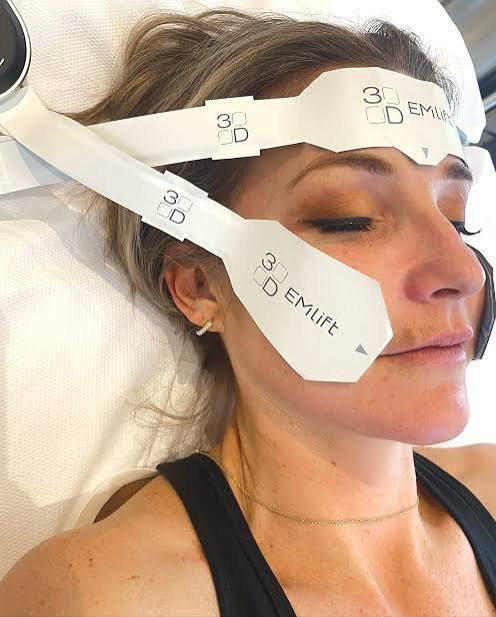
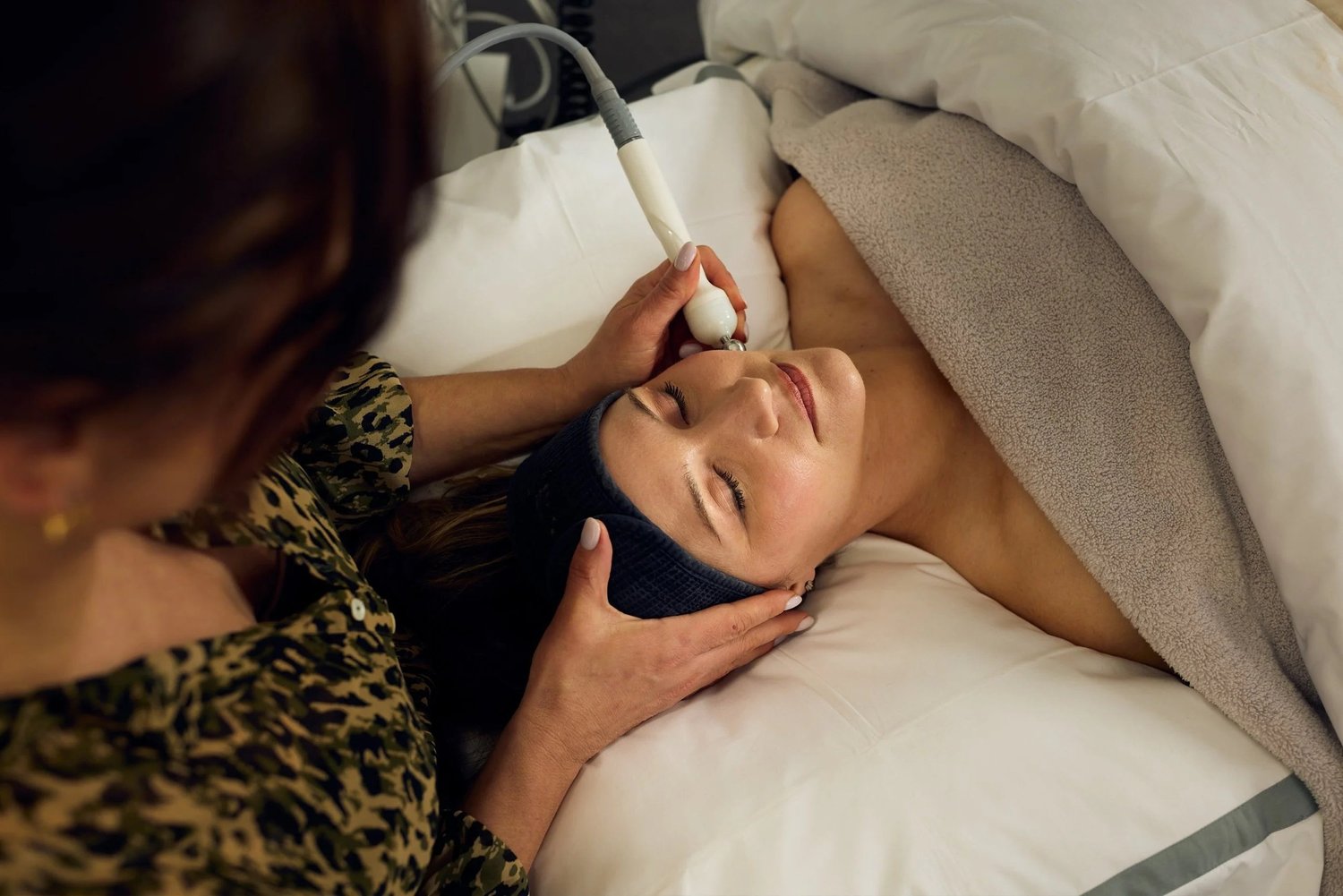
EMLIFT session as part of a bespoke Skin Journey.
There comes a point where your skin no longer reflects how you feel.
Not dramatically. But subtly. A loss of tone. Softness through the jawline. A tiredness that does not quite shift.
For many women, this is where the conversation turns to facelifts. But surgery was never designed to improve skin. It lifts and repositions, but it does not address the underlying quality, strength, or function of the skin itself.
That is where the real opportunity lies.
The problem is not ageing. It is a lack of strategy.
Most people do not need more treatments. They need a clear approach, followed consistently over time. Skin does not respond to occasional intervention. It responds to consistency, conditioning, and the right methods used at the right time.
Why surgery does not address skin
Facelifts create visible change, but they do not improve skin quality or support long-term skin health in a meaningful way. This is why many people continue to seek treatments afterwards. The structure may have been adjusted, but the skin itself has not been properly addressed.
Skin as a long-term investment
Instead of asking what treatment you need, the better question is: what does your skin need over the next few months to function at its best?
This is where a Skin Journey changes everything. A considered combination of treatments, used at the right time, alongside the right home care. Chosen for a reason. Built to last.
Where Emlift fits in
Emlift can play a role, but only within the right context. It stimulates the facial muscles, helping to restore tone and support natural lift.
On its own, it is not the answer. Within a Skin Journey, it becomes one of several tools used to support a bigger outcome.
The goal is not to look different
The goal is to look like yourself, restored. Not tighter. Not altered. Just fresher, stronger, and more in line with how you feel.
Begin with a consultation
If your skin needs more than the occasional treatment, we begin with a consultation at my Edinburgh West End practice. From there, I design a Skin Journey around your skin and your timeline.
More on the programme → Skin Journeys
Or, if you are ready: Book your consultation →
Bridal skin does not come from a facial
Salmon DNA skin treatment, what it is and why I use it
How I choose radiofrequency treatments within a Skin Journey
Radio Frequency Skin Tightening
Radio frequency is one of the most consistently useful technologies I work with. Not because it produces dramatic results in a single session, but because of what it does over time: it stimulates the skin's own collagen and elastin production, gradually improving firmness, tone and structural integrity from within. That is the kind of improvement I am interested in.
It is also, critically, a technology that works differently on different skin. Which is why I do not use one RF device for every client — I use three, and the choice between them is always deliberate.
Dermaforce
combines microneedling with both monopolar and bipolar RF. The depth and energy can be precisely calibrated, which means I can address significant laxity in one treatment and refine texture and tone in the next. For clients whose skin needs substantive lifting and firming, this is where we typically begin.
Emlift
uses synchronised RF alongside HIFES technology, which directly stimulates the facial muscles. The effect is both dermal and muscular — the skin is supported, and the underlying structure is toned. I find this particularly effective where the issue is not just surface quality but loss of definition and lift.
Hydro O2
works with tripolar RF across broader surface areas. It is comfortable, consistent, and well-suited to the maintenance phase of a Skin Journey — sustaining the improvements that deeper work has already established.
In practice, I often use these in combination and in sequence. What I am always working toward is the same thing: steady, structural improvement that respects the skin's own processes rather than overriding them. Radio frequency, used with care and consistency, supports exactly that.
If you would like to understand whether RF has a place in your skin plan, the right starting point is a consultation.
Salmon DNA skin treatment, often referred to as polynucleotides, is being talked about more and more in aesthetics.
Salmon DNA or polynucleotides, like most treatments, come with big claims. The question is not whether it works. It is when, why, and for whom.
Polynucleotides work with the skin's own repair mechanisms. They support cell function, stimulate collagen, and improve resilience over time. It is not something you see overnight. It is more that your skin starts to respond differently.
I recently treated a client in her mid-60s. She leads a full life and came to me with skin that had lost its strength and clarity. No consistent routine, just doing what she could.
After a course of treatment, her skin looked different. More hydrated. More resilient. Brighter. Not artificial or overdone, just restored.
It is not a filler. It does not freeze your face. It does not change how you look. It supports the skin in repairing itself.
I do not use treatments because they are popular. I use them when they have a clear role.
Polynucleotides can be particularly effective when the skin is compromised. Thin, reactive, slower to repair, or lacking resilience. I also use it in areas where the skin tends to weaken earlier — around the eyes, the neck, and the décolleté. It works when the skin needs it.
Some practitioners inject it under the eye. That is not how I work. I use microneedling to deliver it through the skin, which allows for a full-face treatment and a more integrated result.
What I see is consistent. Better hydration. Improved tone. Skin that feels stronger and more capable. No downtime, no disruption.
On its own, it is not the answer. Within a Skin Journey, it becomes part of a wider approach. Used at the right point, alongside the right treatments and home care, it helps rebuild a more stable, resilient foundation.
Scepticism is understandable. This industry is full of noise. But this is not something I use because it is trending. I use it because I see what it does to my skin over time.
If you are considering salmon DNA skin treatment, we begin with a consultation at my Edinburgh West End practice. I will assess your skin properly and decide whether it has a place within your Skin Journey.
This is not about changing how you look. It is about helping your skin function better, so you look like yourself, just stronger, clearer, and more rested.
More on the programme → Skin Journeys
Or, if you are ready: Book your consultation →
You do not need a facelift. You need a Skin Journey
What mesotherapy is – and why the ingredients matter
Early signs of skin ageing and how I approach them
The first signs of ageing can feel like they have appeared overnight, a fine line here, a shadow under the eyes there.
Before you do anything, take stock. These changes are natural, and with the right approach, your skin can age well.
What the first signs might look like
The exact changes you notice first depend on your skin type, lifestyle, and genetics. Common early signs include fine lines around the eyes, dark circles, enlarged pores, slight softening around the jowls, and horizontal lines across the forehead.
If you have drier skin — often seen in Fitzpatrick Types I and II — fine lines may appear earlier, sometimes in your late teens or twenties. Those with oilier or combination skin (Types III and IV) might first notice changes in pore size or skin firmness.
What are Fitzpatrick skin types?
The Fitzpatrick scale is a clinical tool that classifies skin by how it responds to sun exposure. Knowing your type can help predict how your skin is likely to age.
Type I — Very fair skin, often with red or blonde hair. Always burns, never tans.
Type II — Fair skin that usually burns before tanning.
Type III — Medium skin tone, tans more easily but can still burn.
Type IV — Olive or light brown skin, tans easily, burns minimally.
Types V & VI — Medium brown to deep skin tones, rarely burn, tan very easily.
A simple self-check: think about what happens when you spend 30 minutes in midday summer sun without protection. If you always burn and never tan, you are likely Type I. If you tan easily with minimal burning, you are likely Type IV or higher.
Why genetics and lifestyle matter
Genetics set the baseline for how your skin ages — but daily habits can accelerate or slow that process considerably.
What you eat and drink directly affects your skin's health. UV damage accelerates ageing across all skin types. Chronic stress and poor sleep disrupt the skin's natural repair cycle. Smoking, vaping, alcohol, and extreme diets deplete skin vitality over time.
How to respond
You cannot stop time. You can support your skin's resilience. At my Edinburgh West End practice, this is where careful assessment matters — the right approach depends on your skin, not a general protocol. Depending on what I observe, options might include light peels for brightening and sun damage, radiofrequency for skin firmness, IPL for pigmentation, muscle stimulation to maintain contour and tone, or microneedling and mesotherapy to improve hydration and repair the skin barrier.
The key is timing and sequencing — not doing everything at once.
In practice — one client's experience
At 34, one client was preparing for her wedding and wanted clearer, more even-toned skin. She was dealing with dark circles, rosacea, post-inflammatory hyperpigmentation from at-home dermaplaning, and frequent breakouts.
Over six months, her tailored plan included the Ultimate Eye Corrector Treatment for dark circles and fine lines, PRX Peel for immediate firming and lifting, microneedling and mesotherapy to strengthen her skin barrier, and targeted supplements to support gut health and reduce rosacea symptoms.
By the time of her wedding, her skin was clearer, more even, and more settled — without aggressive or invasive procedures. You can read more about the treatments I recommend at this stage here.
The first signs of ageing are simply a signal to start paying closer attention. With a considered approach, your skin can improve steadily — at every stage.
Book your consultation →
What mesotherapy is – and why the ingredients matter
“The most problematic skin is rarely neglected. It is over-treated.”
More treatment has never meant better skin. It has simply meant louder skincare. More products, more devices and more interventions, often layered without pause. After over 30 years working hands-on with skin, I have seen the same pattern repeat itself. The most problematic skin is rarely neglected. It is over-treated.
The biggest change in the industry has not been technology, but patience. Skin is pushed harder and more frequently, usually with the best intentions. People want to do the right thing. What is often missing is restraint. Time to recover. Time to observe. Time to let the skin settle before asking more of it. The result is skin that looks bright briefly, but feels fragile, reactive and unsettled.
Experience teaches you things that protocols cannot. Skin memory. Barrier fatigue. Inflammation disguised as glow. Short-term results that quietly compromise long-term skin quality. This is why I do not chase trends. Skin does not respond well to constant correction. It responds to timing, understanding and respect.
Healthy skin is not created in a single appointment. It is built gradually, with intention. The right treatment at the right moment, followed by enough recovery for the skin to integrate the work. This is why I work in journeys rather than one-off treatments. Sequencing matters more than strength. Consistency more than intensity. Trust more than speed.
This approach is not for everyone. It is not for those seeking instant transformation at any cost. It is for women who want their skin to look as good in ten years as it does today.
The most beautiful skin is rarely the most treated. It is the most understood.
Book your consultation →
Why I use radio frequency within a Skin Journey, and how I choose between three different technologies
Reflections on judging the Scottish Aesthetic Awards 2025
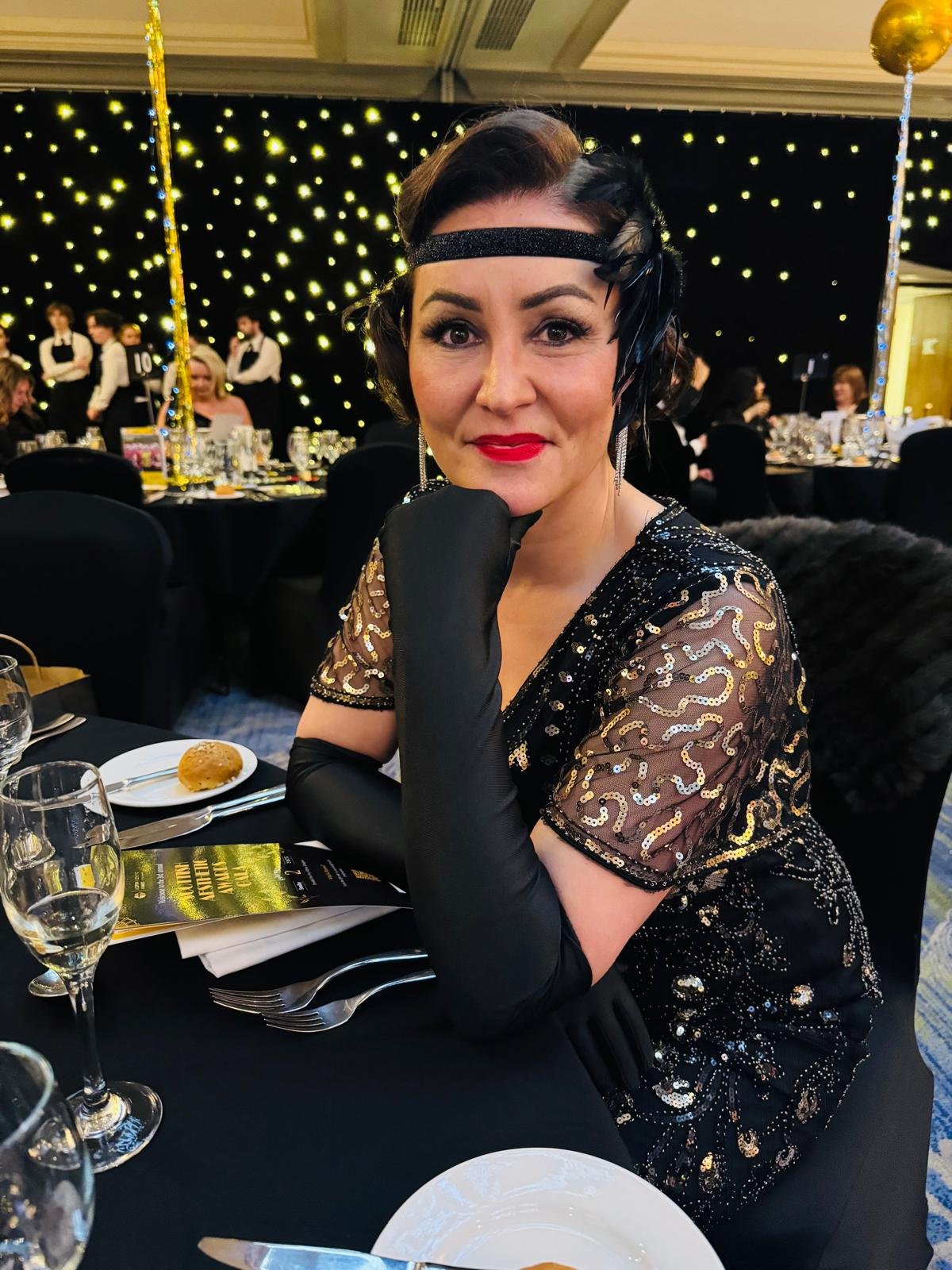
I had the honour of serving as a judge at the Scottish Aesthetic Awards 2025.
Earlier this year I had the honour of serving as a judge at the Scottish Aesthetic Awards 2025 in Edinburgh, an evening dedicated to recognising the practitioners and clinics setting the standard for skin and aesthetic care across Scotland.
Judging is a different kind of attention. You are not there as a client or a colleague. You are assessing evidence, of consistency, of clinical integrity, of outcomes achieved with care and without compromise. It is a reminder of how high the bar can be, and how much it matters that it is held there.
What struck me most was the breadth of genuine excellence on display. Not trends, not volume, not the loudest marketing but considered, results-driven practice. The kind of work that changes skin over time rather than dressing it up for a photograph.
That is always what I am looking for. In my own treatment room at Manor Place and in the work of others.
Congratulations to all the winners and nominees. The standard of the industry in Scotland is something to be proud of.